This is something I really must try…. 🙂
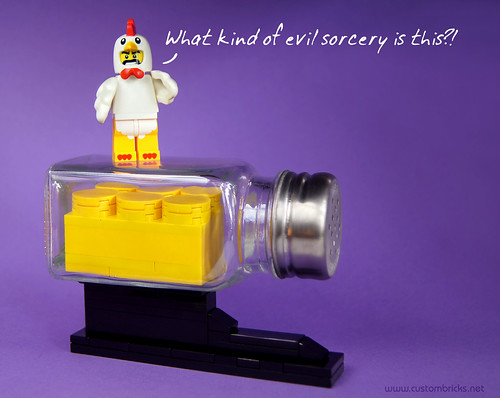
This new model by Kristi of Custombricks kind of blew my mind. I’ve seen a few models built in glass bottles before, but this is so tight, its amazing!
Makes me want to try this…

This is something I really must try…. 🙂
This new model by Kristi of Custombricks kind of blew my mind. I’ve seen a few models built in glass bottles before, but this is so tight, its amazing!
Makes me want to try this…
interesting post here on those little red minifigures…
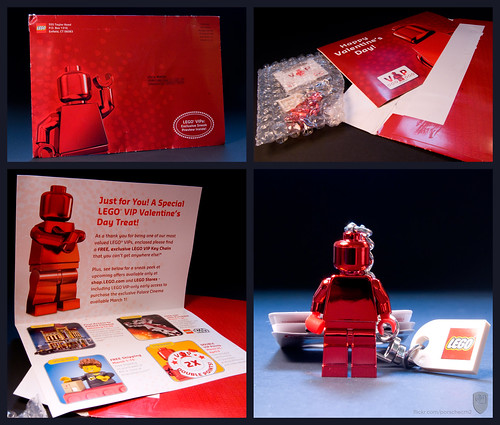 Picture Credit:Chris Malloy
Have you gotten one? I wish I could say that this one in the picture was mine, but sadly I’ve yet to receive one. I’m really hoping I do, but nothing in the mail so far.
According to BrickSet this promo is running in North America and Europe for VIP members.
If you don’t know what the VIP program is you can read about it on the LEGO website (this is the US link, you might have to change country region to find out the details for where you live). But the basics of it is that for every $100 you spend, you get $5 in credit (USD).
Its a great program and I can honestly say that I’ve gotten several large sets for “free” using VIP credit.
Sadly, even if you are a VIP member that doesn’t guarantee you’ll get one — only “the most active…
View original post 297 more words
Charles and Scarlett sped over the ground on the horse. But Scarlett knew these woods and these tracks – and knew that Charles was heading back to his house.
“Why are we going this way?” she asked.
“Where better to hide than right under their noses!” Charles replied “They’re not after me – and they’re only after you because they saw what they did to your father!”
Scarlet thought this made sense – so resigned herself to being the pillion as Charles guided his horse back. They walked in through the rear of Charles’ estate and once in the stable block dismounted and put the horse in its stable. Charles invited Scarlett into the house with the offer of tea and cake – and Scarlett suddenly realised how pleasant that sounded. She followed Charles into the house as he led her through to the drawing room. Once seated, Charles excused himself – leaving Scarlett alone. As he left the room, he pulled the door to close it, but it didn’t quite close on the latch, so within a few moments, the door opened by the air pressures enough that Scarlett could hear everything going on outside the room.
There was a noise of people entering through the back door – hushed, earnest voices.
“Yes, she’s in there. No, I don’t think she knows much more than she saw. I don’t know if she knows that. I’m sure that she trusts me.”
Charles re-entered the room, smiling and carrying the tea tray. Unusual, thought Scarlett, I thought they had a butler called Groves who would have done that.
“Scarlett, there are some gentlemen here who would like to speak to you urgently.”
Before Scarlett could react, three large men entered the room. Scarlett recognised the lead man as the one she had met at her father’s house earlier that day. She looked at Charles, whose face had become drawn and serious.
“Charles, what is going on?”
“Well my dear, your father was privy to a number of secrets and unfortunately it was not safe for one person to know all this information – especially if they should not have known it. So, my colleague here had to assist him in becoming forgetful.”
“So you were responsible for all this?”
“Not exactly, my dear. If your father had decided to not pursue the leads of the information, he would still be alive today. He just refused to let go – leaving us with little space to do anything.”
“So what was it that was so secret that you were prepared to kill him – and by the looks of things, kill me too?”
Charles laughed. “My dear, I am sure that some people would happily divulge such information; however, I am not one of those people – so if you don’t know, then you won’t know.”
The large man stepped forward, hands outstretched to grab Scarlett. Scarlett subtly reached into her bag and felt for the metal of the Protector. She flicked a small switch and felt the hum. She knew that as it got warmer – there! – That it was ready. The goon was almost on top, so without further hesitation she pulled the weapon from her purse. There was a blue flash of light and the man fell to the ground where he stood. The other two men just stood their ground, trying to comprehend what had just happened. But Charles knew. He cried
“You stupid girl!” and rushed forward – but just enough time had passed that the Protector had partly recharged. Without waiting for a full load, Scarlett pulled the trigger again. This time, a visible blue light crackled from the weapon to Charles stomach. Charles collapsed holding his stomach, the electrical charge causing his abdomen to contract quite severely that it immediately disabled him. Scarlett leapt up and grabbed the fire poker. Charles attempted to grab her boot, but the pain in his stomach meant that any moment was painful. Additionally, Scarlett drove the spike of the poker onto his hand. Having not long come from the fire, it was still red hot and the flesh of his palm melted. She raised the poker and pointed it at the two other thugs. One made a move towards her, but she swung at him and he quickly decided to retreat – the other just ran out of the room. Scarlett followed, but ran through the back door and to the stables. She grabbed the nearest horse and leapt onto its back and prepared to ride out again – but now she wasn’t sure if she could trust anyone.
Now free from the house, Scarlett slowed the carriage a little. She could tell that the manner in which she departed had put the engine under considerable strain and she knew she could not risk it breaking down so close to the house.
But Scarlett also knew that she couldn’t just drive nowhere – there had to be a plan. Perhaps the safest place would be to head for London; with so many people in the capital, Scarlett felt she could surely blend in and hide in open sight. She knew her father’s business was partly based in London and that she could carefully work out why father had been attacked in such a serious way. So that was the plan – Scarlett just hoped that there was enough fuel on the carriage to make that a reality.
A few miles down the road, Scarlett had to swerve to avoid a large pothole in the road. Even at the much slower speed, the change in direction was too much for the large wooden wheels and three spokes finally gave in and splintered. The carriage lurched to the right, and Scarlett was flung from the carriage and into a ditch. The carriage itself struck the verge and bounced along the ditch just a short way ahead of Scarlett. the front buried itself into the mud bank and the whole vehicle fell to one side. The weight of the boiler at the rear broke from its holdings – falling back towards Scarlett. Fortunately, she was able to scramble up the side of the ditch as the burning fuel and heated water spilled over where she had been just moments before. Then it was quiet, save for the hiss of the water and the mud that it heated.
Scarlett realised that whilst this was an awful frustration, she needed to keep moving. Fortunately, her country upbringing had meant that the boots she was wearing was practical for walking, unlike the more dainty affairs that some of her friends wore. With her hands, she brushed what she could off the dress and picked out some of the small sticks in her hair and made ready to carry on walking. She was sure that she looked a fright – but hopefully not too in distress.
As she walked down the road, she heard the sound of horses hooves as they struck the ground. Before she could dash to the side, the horse was upon her.
“Hullo Miss!” cried a voice, the tone being friendly and not with any malice. She turned to see who called her – and immediately recognised Charles from the house next door. “Why, Miss Scarlett!” said Charles, “You are a long way from your house. Does your father know you are here on your own?”
“Charles, I need to get away from the house and to safety. My father has been…”
Charles interrupted.
“I did wonder; there was the most loud commotion from your house and I saw the carriage leave at great speed. Come on, I’ll take you a little further.”
With that he held out his hand and with a small jump Scarlett lept up onto the back of the horse. She knew that if friends saw her like this normally, they would surely comment – but she had to get away.
Once safely on the back of the steed, she held on tightly as Charles kicked his heels in and the horse set off. Hopefully towards safety and not into danger.
One of my biggest frustrations with the “Bag for Life” bags, or the more portable fold up shopping bags, is that they are so… well, dreary. Sure, they’re practical and they (mostly) do what they are supposed to do, but if you’ve made the effort to look smart to go out (even to the shops) why then ruin the effect with the emergency carrier?
This bag is a new item from MagpiesChest, and is both practical and stylish. It does fold up but when it is open it still looks good. Shopping fashionably!
As always, this is a unique item – but if you would like something similar (say, purple isn’t a colour that suits you) contact us by email and let us know – we may be able to make something unique for you!

info@magpieschest.co.uk
“I said… going somewhere?”
Scarlett’s attention was drawn to the quick flash of gun metal near this man’s hand. With father still lying lifeless in the room, she reacted instinctively. Her knee moved upwards swiftly; although her skirt was quite full, she had always made sure that they were practical so she could undertake almost anything without being weighed down by lots of material. It also helped that father (being a practical man) had sought to ensure that Scarlett’s education had included both martial arts and fencing; two skills that father had picked up on his travels. The knee connected with its intended target and the air was driven from the very surprised man. Once the connection was made, Scarlett rushed forward, unsettling the thug who felt back with no resistance.
Outside, Scarlett started to head directly to the barn. She slowed slightly as she realised that the horses were no longer stabled there – but then she saw father’s new metal carriage; the steam still hissing from the boiler as the metal continued to heat the water. She hoped that there would be sufficient heat in the engine to drive her a little way from the house; if only so she could properly start the engines. She jumped onto the driving bench, grasped the hand brake and released it. The carriage lurched forwards and Scarlett pressed both pedals, causing an even bigger lurch as the engine fought against foot brake and accelerator. With a breath, she removed her foot slowly from one pedal, which she discovered was fortunately the brake – and the carriage almost launched itself forward. She grabbed the massive steering wheel to guide it towards the gates at the end of the gravel path. As the machine picked up speed, she heard the shouting and yelling from inside the house and saw that thug (now limping) come out. She glanced to see him raise his gun to aim.
Then Scarlett saw a flash of light, and then her attacker fell to the ground. She realised that father must have got to his own adapted weapon, a mixture of gun and portable energy that would fire a beam of powerful disrupting light which would kill without the need for bullets.
Scarlett could not dwell on the current situation any further. She reached the gates of the house and barrelling through them had to turn the steering wheel hard to change its course onto the roadway. She hadn’t seen Commander Barry’s own horse drawn carriage as it had been shielded by the brick wall, but the Commander’s horses rose up onto their hind legs in surprise. Scarlett realised that if she ever got the chance, she would need to explain and apologise to the Commander – but escape was the order of the day. As the carriage turned sharply to the left, she felt the wood and metal wheels bend, flex and crack a little under the change of direction. But she was away – and he needed to get further from the house so she could work out what needed to be done next.
Scarlett sat on the hard, wooden stool, staring vacantly out of the window. Father would have been home by now, she thought to herself, except that last month he traded the horse carriage for Professor Bunt’s new steam powered contraption. Although it was a beautiful thing to look at when it was cold and unused, once Groves had fed the small boiler at the back it changed from being a docile engineering sculpture to a living, breathing monster. Indeed, it was a good job that father had traded the carriage as it had meant moving PeaceRiver (her favourite horse) to the neighbouring stable block as it had been scared with the various hiss, pings and sighs that came from this new copper and brass beast as it cooled.
The latch on the cottage door clicked up, and a dishevelled man entered the small kitchen.
“Father!” cried Scarlett. “What has happened? ”
The man stumbled across to the kitchen table and sat down. Scarlett looked at him – his face was badly scratched, the jacket sleeve was torn away and there was a huge tear down his trousers, the grey now heavily discoloured from… Scarlett surpressed the gasp as she realised that there was a huge deep wound in his leg.
Scarlett’s father looked forcefully at Scarlett. His breath, rasping, clawing at getting air into the lungs, was desperate and urgent.
“Get… out… of… the house. Flee… while you can. I’ll… distract… them…”
“Father! Who? What! Speak to me!!!”
Father slumped forward – the effort of getting to the house had obviously taken it’s toll on him and it was almost the final straw to get those words out. Scarlett was confused – and more than a little scared. This feeling was intensified when she heard the sounds of hob nail boots kicking hard at the door to open it. The latches splintered and cracked as they tried to resist the forces trying to break through.
Fortunately, Scarlett was a prepared woman and grabbing her bag, she fled through the back door that father had come in through. Just as she was closing the door she heard the final snapping and cracking of the bolts as they gave way. She heard the menacing tones of the men as they stormed into the cottage – but she was away. She turned right to head for the road – and bounced off the huge beast of a man standing in her way.
“Going somewhere?” he said.
To be continued…
It’s been a very exciting week – thank you to everyone who has looked at the website and provided us with some positive comments about the site and bags that we have on them.
Our initial goal this week was to get the website up and to ask for friends to “Like” the Facebook page; by Tuesday we had already reached that and by the end of the week we had started to sell as well! This is great news and we’re very chuffed about it!
Sue and Roz are now working away making the next small batch of exciting products – and for anyone who thinks that they like the bags, but the ones on Magpieschest are a little too alternative, well watch this space as things may change for the better in the next month or so.
Of course, as each bag is handmade, if you see something but think “I’d rather it was in green” or “it had a little more…” then please get in touch and ask!


 Magpieschest's Weblog